Research papers
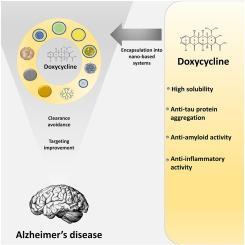
Repurposing doxycycline for Alzheimer's treatment: Challenges from a nano-based drug delivery perspective
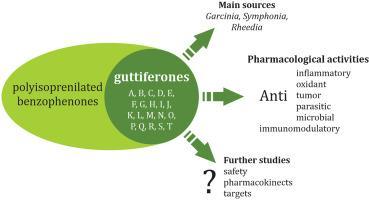
Guttiferones: An insight into occurrence, biosynthesis, and their broad spectrum of pharmacological activities
Strictly Necessary CookiesAlways activeThese cookies are necessary for the website to function and cannot be switched off in our systems. They are usually only set in response to actions made by you which amount to a request for services, such as setting your privacy preferences, logging in or filling in forms. You can set your browser to block or alert you about these cookies, but some parts of the site will not then work.
Cookie Details List
Strictly Necessary CookiesAlways active
Always act...
Cookie Details List
Strictly Necessary CookiesAlways active
Always act...

Copaifera langsdorffii Oleoresin-Loaded Nanostructured Lipid Carrier Emulgel Improves Cutaneous Healing by Anti-Inflammatory and Re-Epithelialization Mechanisms
The skin is essential to the integrity of the organism. The disruption of this organ promotes a wound, and the organism starts the healing to reconstruct the skin. Copaifera langsdorffii is a tree used in folk medicine to treat skin affections, with antioxidant and anti-inflammatory properties. In our study, the oleoresin of the plant was associated with nanostructured lipid carriers, aiming to evaluate the healing potential of this formulation and compare the treatment with reference drugs used...
Beta‐caryophyllene as an antioxidant, anti‐inflammatory and re‐epithelialization activities in a rat skin wound excision model
The skin is a critical organ for the maintenance of the integrity and protection of the organism. When a wound occurs, a sequence of healing mechanisms is triggered to reconstruct the wounded area. β-caryophyllene is a sesquiterpene in Copaifera langsdorffii oleoresin with antioxidant and anti-inflammatory potential. On the basis of previous studies with C. langsdorffii, β-caryophyllene was selected to evaluate its wound healing potential and pharmacological mechanisms. The excision wound model...
Histological, Immunohistochemical and Antioxidant Analysis of Skin Wound Healing Influenced by the Topical Application of Brazilian Red Propolis

Brazilian Green Propolis‐Based Nanostructured System: Development, Characterization and its Role in the Modulation of Cytokines in In Vitro and In Vivo Experimental Models
Brazilian green propolis from Baccharis dracunculifolia (“alecrim do campo”), stands out for the majority presence of phenolic acids with therapeutic properties well-described in the literature, such as anti-inflammatory, antioxidant, and antitumor. However, its direct application, like many natural products, is limited due to its unfavorable physicochemical properties. Thus, we hypothesize that the encapsulation of these compounds in nanostructured systems is a suitable instrument to overcome t...
Mimosa caesalpiniifolia (Fabaceae), a medicinal plant from Brazilian cerrado with antioxidant and anti- inflammatory properties
Cutaneous Wound Healing: An Update from Physiopathology to Current Therapies
The skin is the largest organ of humans that acts as the first mechanical barrier between the organism and the external environmental, to protect organism against deleterious agents, control thermal regulation, and regulate water and electrolytes homeostasis [1]. The morphologic structure of skin comprises two layers, the epidermis and dermis [2]. The epidermis is the most external layer of the skin and is divided into four or five sub-layers, depending on the region of the body [2]. Among the c...
The Use of Menthol in Skin Wound Healing—Anti-Inflammatory Potential, Antioxidant Defense System Stimulation and Increased Epithelialization
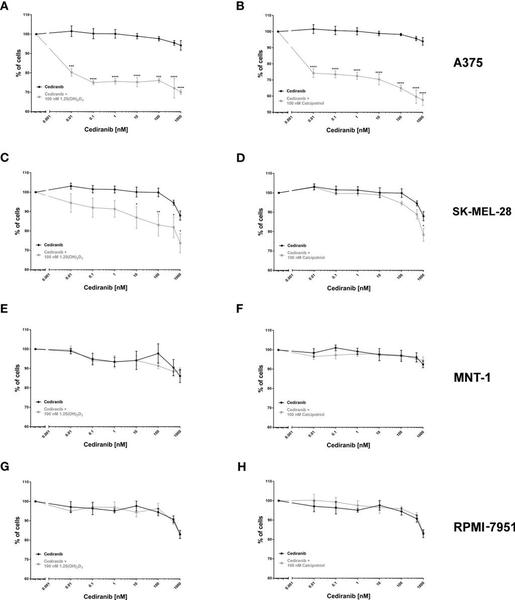
Frontiers | Vitamin D Enhances Anticancer Properties of Cediranib, a VEGFR Inhibitor, by Modulation of VEGFR2 Expression in Melanoma Cells
IntroductionMelanoma, although representing a minor fraction of all skin malignancies, remains the most lethal form (1, 2). Before the modern era, patients with advanced melanoma could expect a 5-year survival rate of 10% (3). Beginning in 2011, novel therapies, including immunotherapy with immune checkpoint inhibitors CTLA-4 or PD-1, as well as targeted therapy with BRAF and MEK inhibitors, have become a key breakthrough in the clinical landscape of melanoma treatment (4). Unprecedented in canc...
From Inflammation to Cutaneous Repair: Topical Application of Lupeol Improves Skin Wound Healing in Rats by Modulating the Cytokine Levels, NF-κB, Ki-67, Growth Factor Expression, and Distribution of

Artepillin C as an outstanding phenolic compound of Brazilian green propolis for disease treatment: A review on pharmacological aspects - PubMed
Propolis is a viscous resin consisting of plant material (shoots, flowers, and plant exudates), salivary secretions and waxes produced by Apis mellifera bees. Its popular use aroused the interests of scientific research, which proved to be a potential source of various bioactive substances. The chemical composition of propolis depends on several factors, such as the different types of plant sources collected by bees, geographic origin, and the time of year in which they are produced, but it is k...
Lupeol, a Dietary Triterpene, Enhances Wound Healing in Streptozotocin-Induced Hyperglycemic Rats with Modulatory Effects on Inflammation, Oxidative Stress, and Angiogenesis
Diabetes mellitus (DM) is a chronic metabolic disease, which is characterized by elevated levels of blood glucose leading, over time, to heart, blood vessel, eye, kidney, and nerve damage and failure to repair damage in skin wounds [1]. According to the World Health Organization (WHO), this disease affects 171 million people worldwide, and this number may be projected to reach approximately 366 million by 2030 [2]. The most common complication in patients with diabetes is an altered skin wound h...
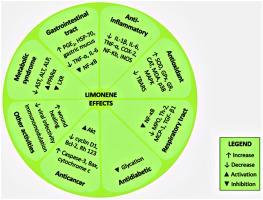
Limonene: Aroma of innovation in health and disease
Strictly Necessary CookiesAlways activeThese cookies are necessary for the website to function and cannot be switched off in our systems. They are usually only set in response to actions made by you which amount to a request for services, such as setting your privacy preferences, logging in or filling in forms. You can set your browser to block or alert you about these cookies, but some parts of the site will not then work.
Cookie Details List
Strictly Necessary CookiesAlways active
Always act...
Cookie Details List
Strictly Necessary CookiesAlways active
Always act...
Lupeol, a Pentacyclic Triterpene, Promotes Migration, Wound Closure, and Contractile Effect In Vitro: Possible Involvement of PI3K/Akt and p38/ERK/MAPK Pathways
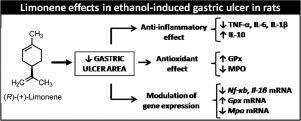
Gastroprotective effect of limonene in rats: Influence on oxidative stress, inflammation and gene expression
Thus, it might be said that the gastroprotective effect of GA may be partly related to the stimulations of gastric nitric oxide and prostaglandin. A relationship between inflammation and the course of ethanol-induced gastric ulcer damage has been widely recognized [43,44]. Ethanol induces the inflammatory response that initiates macrophages produce vast amounts of pro-inflammatory cytokines such as IL-1β, IL-6 and TNF-α, which promote the accumulation of neutrophils in the inflammation site, lea...
Evaluation of the Gastroprotective and Antioxidant Effects of Caffeine and Caffeic Acid on EthanolInduced Gastric Ulcer
Skin Wound Healing Potential and Mechanisms of the Hydroalcoholic Extract of Leaves and Oleoresin of Copaifera langsdorffii Desf. Kuntze in Rats
Chemical and Biological Aspects of Extracts from Medicinal Plants with Antidiabetic Effects - PubMed
Diabetes mellitus is a chronic disease and a leading cause of death in western countries. Despite advancements in the clinical management of the disease, it is not possible to control the late complications of diabetes. The main characteristic feature of diabetes is hyperglycemia, which reflects the deterioration in the use of glucose due to a faulty or poor response to insulin secretion. Alloxan and streptozotocin (STZ) are the chemical tools that are most commonly used to study the disease in...
Cissus sicyoides: Pharmacological Mechanisms Involved in the Anti-Inflammatory and Antidiarrheal Activities
Cissus sicyoides Linneu (Vitaceae) originates from the Dominican Republic but its medicinal use is widespread in tropical America [1]. This medicinal plant known in Brazil as “Cortina”, “cipó-pucá”, “cortina japonesa”, “uva brava” and “insulina vegetal” is generally used in Brazilian folk medicine to treat: epilepsy, stroke, diabetes, gastric ulcer, abscesses, inflammation and rheumatoid arthritis [2,3,4]. In Mexico, this species known as “sanalotodo” is used in traditional medicine for relievin...
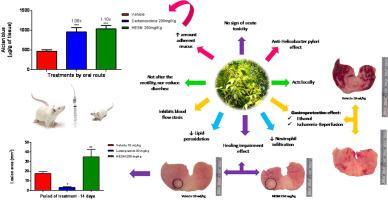
Does the gastroprotective action of a medicinal plant ensure healing effects? An integrative study of the biological effects of Serjania marginata Casar. (Sapindaceae) in rats
All content on this site: Copyright © 2026 Elsevier B.V., its licensors, and contributors. All rights are reserved, including those for text and data mining, AI training, and similar technologies. For all open access content, the relevant licensing terms apply.
All content on this site: Copyright © 2026 Elsevier B.V., its licensors, and contributors. All rights are reserved, including those for text and data mining, AI training, and similar technologies. For all open access content, the relevan...
All content on this site: Copyright © 2026 Elsevier B.V., its licensors, and contributors. All rights are reserved, including those for text and data mining, AI training, and similar technologies. For all open access content, the relevan...

Jatropha curcas L. (Euphorbiaceae) as a new biopesticide: preliminary phytochemical analysis and larvicidal activity against Aedes aegypti (Diptera: Culicidae)

Prospecção fitoquímica preliminar de plantas nativas do cerrado de uso popular medicinal pela comunidade rural do assentamento vale verde - Tocantins
Este estudo objetivou caracterizar qualitativamente grupos de metabólitos secundários e alguns constituintes de 9 espécies de plantas medicinais nativas do cerrado utilizadas pela comunidade rural do Assentamento Vale Verde, identificando potencialidades biológicas e farmacológicas. As informações referentes às plantas de uso medicinal foram obtidas por meio de estudos etnobotânicos e etnofarmacológicos, realizados no período de 2010 a 2012. O material botânico coletado foi identificado e deposi...
Load More
